
Golden Triangle tour

The Golden Triangle Tour with Shimla & Manali

4.9 (2,304)

This is one of India’s most sought-after travel experiences, combining the world-famous Golden Triangle cities of Delhi, Agra, and Jaipur with the cool mountain escapes of Shimla and Manali. Over nine carefully planned days, you will stand before the Taj Mahal at sunrise, walk through centuries-old royal forts, explore colorful bazaars (local markets), and breathe in the clean Himalayan mountain air. Whether you are a seasoned traveler from the United States or Europe or someone experiencing India for the first time, this tour is built to give you a smooth, enriching, and stress-free journey from the moment your flight lands in Delhi.


Tour Highlights

check

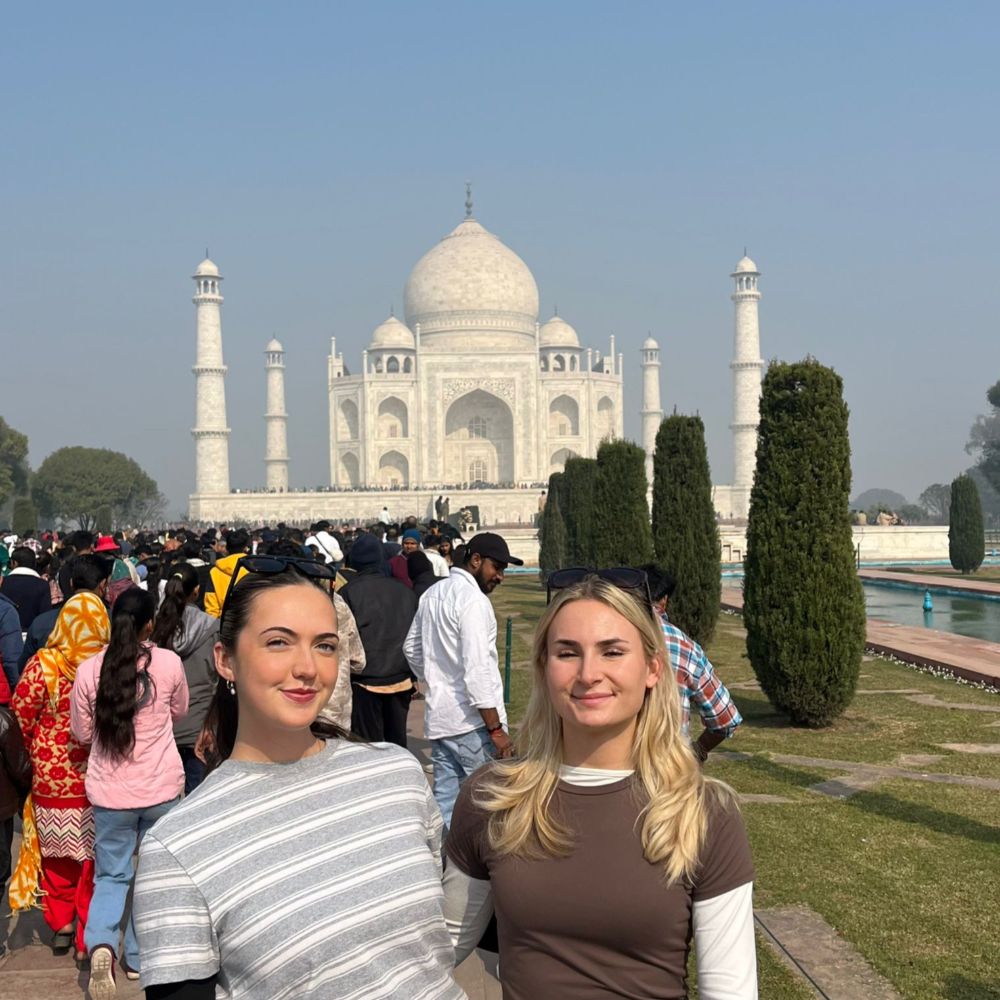
See the Taj Mahal — the world's most famous monument to love — up close at the golden hour of sunrise when the light is most magical.

check

Explore the Amber Fort (a massive 16th-century palace-fortress on a hilltop) in Jaipur, riding up by jeep for sweeping valley views.

check

Walk through the Red Fort and Qutub Minar in Delhi, two UNESCO World Heritage sites that tell India's story across thousands of years.

check

Visit Fatehpur Sikri, a perfectly preserved ghost city built by Emperor Akbar that was abandoned shortly after its construction — one of India's most haunting historical sites.

check

Discover Agra Fort, a red sandstone fortress from the mid-15th century where Emperor Shah Jahan was famously imprisoned and could only see the Taj Mahal from a distance.

check

Drive up to Shimla (elevation: 7,200 feet), a charming hill station first built by the British as a mountain retreat, filled with colonial-era buildings and pine forests.

check

Explore Manali (elevation: 6,730 feet), surrounded by snow-capped Himalayan peaks, ancient deodar cedar forests, and roaring mountain rivers.

check

Visit Solang Valley for world-class adventure activities, including paragliding, zorbing (rolling inside a giant transparent ball), and skiing in winter months.

check

Attempt a visit to Rohtang Pass (elevation: 13,051 feet) — one of the highest motorable roads in the world, offering views of glaciers and permanent snow fields.

check

Witness a live Pietra Dura (stone inlay art) demonstration in Agra — the same technique used by thousands of craftspeople who built the Taj Mahal over 22 years.

check

Explore royal textile weaving traditions in Jaipur, where artisans have hand-knotted rugs and carpets using techniques passed down through generations for centuries.

check

Stroll through the Kufri hill village near Shimla for local culture and scenic Himalayan landscapes away from the city crowds.

check

Visit the Hadimba Temple (had-IM-ba) in Manali, a 16th-century wooden pagoda-style temple nestled inside an ancient cedar forest.

check

Travel in a private air-conditioned vehicle with a single verified, hill-certified driver for the full duration of your trip — no switching vehicles mid-journey.

check

All local taxi union clearances and hill-area driving permits are pre-arranged by us so you never face any surprise roadblocks or extra payments.

check

Government-issued Rohtang Pass permits are handled and booked by our team in advance, guaranteeing your snow mountain visit is not missed.

check

Stay in handpicked 3- to 4-star hotels with confirmed central heating in Shimla and Manali — essential for February and November travel.

check

Battery-operated carts are arranged at the Taj Mahal for guests who prefer not to walk long distances.

check

Your driver makes planned rest stops only at clean, verified, tourist-friendly facilities with western-style restrooms during the long mountain drives.

check

A dedicated Guest Happiness Manager is available to you 24/7 via WhatsApp throughout your trip — completely separate from your driver.

The Golden Triangle Tour with Shimla & Manali Complete Itinerary

Arrival in Delhi & City Exploration — Then Drive to Agra (3 hrs) +

Your tour begins the moment you arrive at Indira Gandhi International Airport in Delhi. Your private driver will meet you at the arrivals hall with a name board and transfer you to the city. Delhi is India’s capital — a massive, vibrant city where ancient history and modern energy exist side by side on the same street.

Your first stop is the Red Fort (Lal Qila), a massive red sandstone palace-fortress built in the 1600s by the Mughal (MOO-gul) emperor Shah Jahan—the same emperor who built the Taj Mahal. Next, visit Qutub Minar, a soaring 240-foot tower built in 1193 and recognized as a UNESCO World Heritage site. After lunch, drive past India Gate—a 138-foot war memorial arch at the heart of the city—and visit the Lotus Temple, a stunning modern house of worship shaped like a blooming flower that welcomes people of all religions.

In the evening, your driver takes you on the Yamuna Expressway (a smooth, highway-standard road) for the three-hour drive to Agra. Check in to your hotel and rest. Tomorrow morning, you have a sunrise appointment with one of the seven wonders of the world.

Agra Sunrise at the Taj Mahal, Agra Fort & Fatehpur Sikri — Drive to Jaipur (4 hrs) +

This is the day most travelers remember for the rest of their lives. You will wake before dawn for an early morning entry to the Taj Mahal—and experiencing it at sunrise, when the white marble glows pink and gold and the crowds are thin, is one of the most breathtaking moments on Earth. The Taj Mahal (“Crown of Palaces”) was built between 1632 and 1653 by Emperor Shah Jahan as a tribute to his wife Mumtaz Mahal, who died in childbirth. Your expert guide will walk you through the history, the architecture, and the extraordinary craftsmanship of the stone inlay work (Pietra Dura) that decorates every surface.

After breakfast, you will visit the Agra Fort—a 16th-century red sandstone fortress that served as the royal residence for the Mughal emperors. This is where Shah Jahan spent the final years of his life under house arrest, looking out toward the Taj Mahal from his window. Before leaving Agra, you will have the opportunity to visit a working Pietra Dura craft studio, where master artisans demonstrate the centuries-old technique of cutting and setting precious stones into marble—the same art form used on the Taj Mahal itself. You will see the craftsmanship live and can view a curated collection of finished marble pieces.

En route to Jaipur, your drive passes through Fatehpur Sikri — a remarkable red sandstone city built by Emperor Akbar in the 1570s that was abandoned less than 20 years after completion, leaving it perfectly preserved. Walk through the Buland Darwaza (the “Gate of Magnificence,” one of the tallest gateways in the world) and the serene courtyard of the Sufi saint Sheikh Salim Chishti. Arrive in Jaipur by evening and check in to your hotel.

Jaipur — The Pink City's Royal Palaces, Forts & Living Bazaars (Markets) +

Jaipur is called the “Pink City” because in 1876, the entire old city was painted terracotta pink to welcome the Prince of Wales—and it has stayed that color ever since. It is the capital of Rajasthan (rah-jah-STHAN), India’s largest state, and a city where royal history is around every corner.

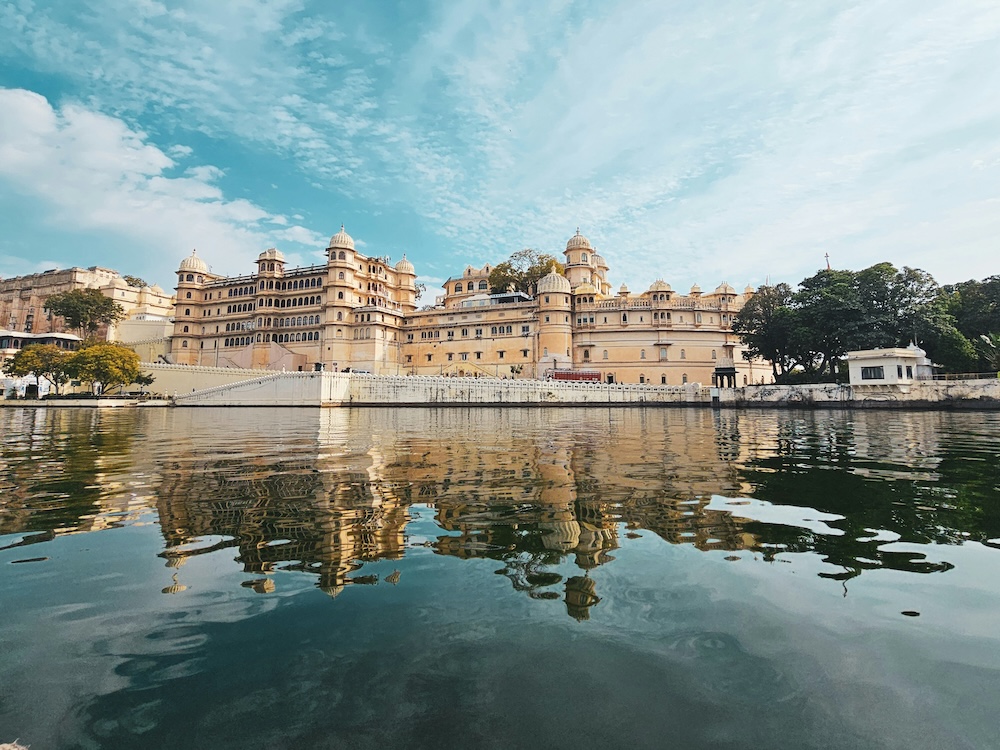
Begin the day with a jeep ride up to the Amber Fort (AHM-er), a stunning hilltop fortress-palace built in the 16th century by the Rajput (RAHJ-poot) kings—the warrior clan who ruled this region. The fort’s massive courtyards, ornate mirror-work halls, and panoramic views over the surrounding valley make it one of the most spectacular buildings in all of Asia. Next, visit the City Palace in the heart of Jaipur — a grand complex of courtyards, gardens, and museums that blends Mughal and Rajput architectural styles and is still home to the descendants of the royal family today.

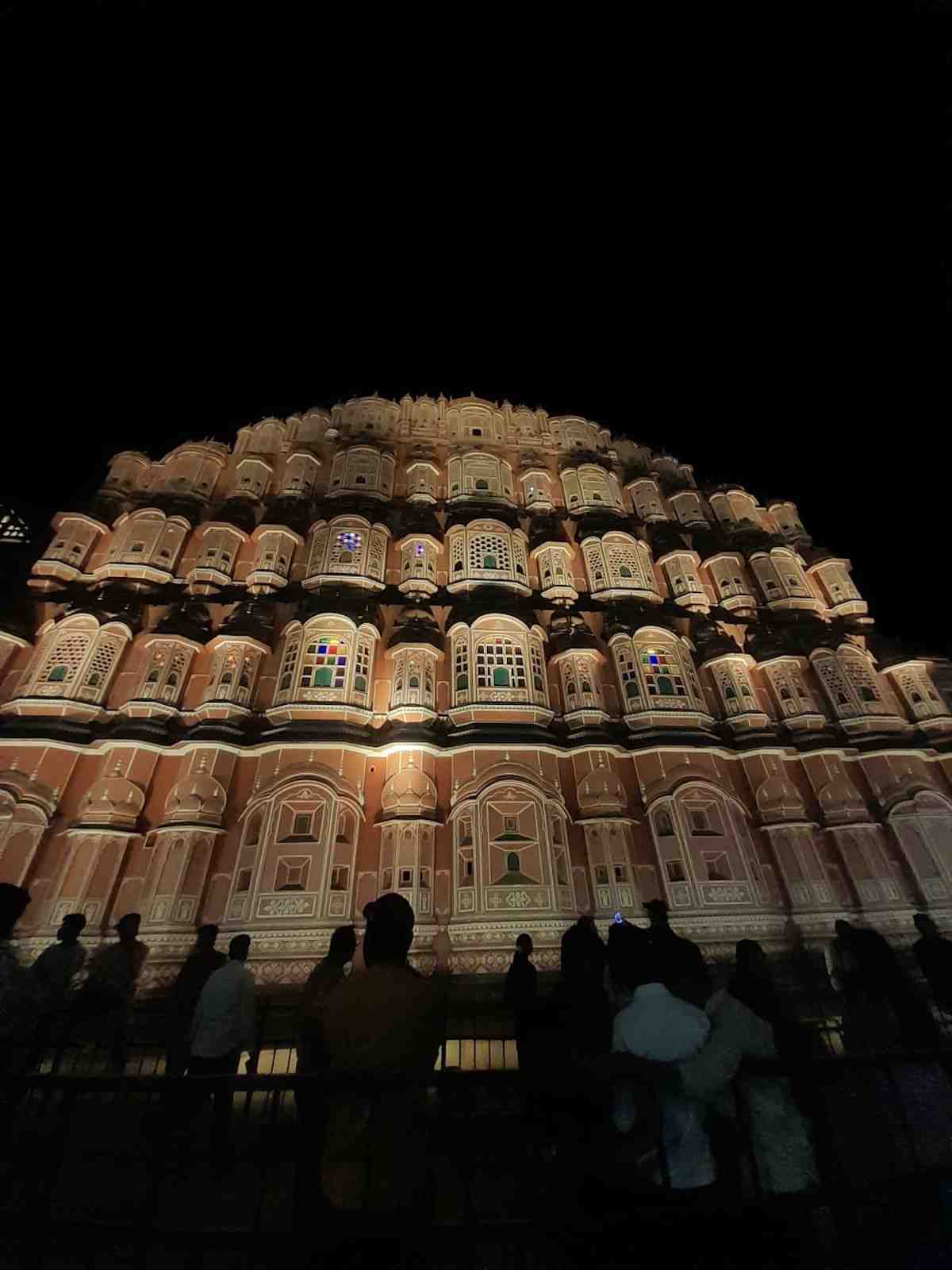
End the morning with a photo stop at Hawa Mahal (“Palace of Winds”), a five-story pink sandstone facade with 953 small latticed windows (called “jharokhas”), designed so royal women could observe street life and festivals without being seen. The afternoon is a wonderful time to explore the bazaars (markets) of the old city, famous for handmade jewelry, block-printed fabrics, and traditional Rajasthani handicrafts. You will also have the opportunity to visit a textile workshop where artisans demonstrate the royal tradition of hand-knotted carpet and rug weaving—one of Jaipur’s most celebrated craft forms.

Drive from Jaipur to Shimla — Entering the Himalayas (approx. 7–8 hrs) +

Today is a travel day, and it is a beautiful one. Your driver—who is fully certified for Himalayan mountain driving—takes you on the scenic route north from Jaipur toward Shimla (SHIM-la), the former summer capital of British India. As the flat plains of Rajasthan give way to the foothills of the Himalayan mountain range, the landscape transforms dramatically: terraced fields, pine-covered ridges, and cooler air mark your arrival in the mountains.

Your driver makes planned stops at clean, verified rest facilities—including well-known highway plazas and eateries with proper western-style restrooms—so long drives are comfortable rather than stressful. Arrive in Shimla in the evening, check in to your hotel (rooms confirmed with central heating), and enjoy dinner at leisure.

Shimla — Mall Road, Jakhu Temple & Kufri Hill Village +

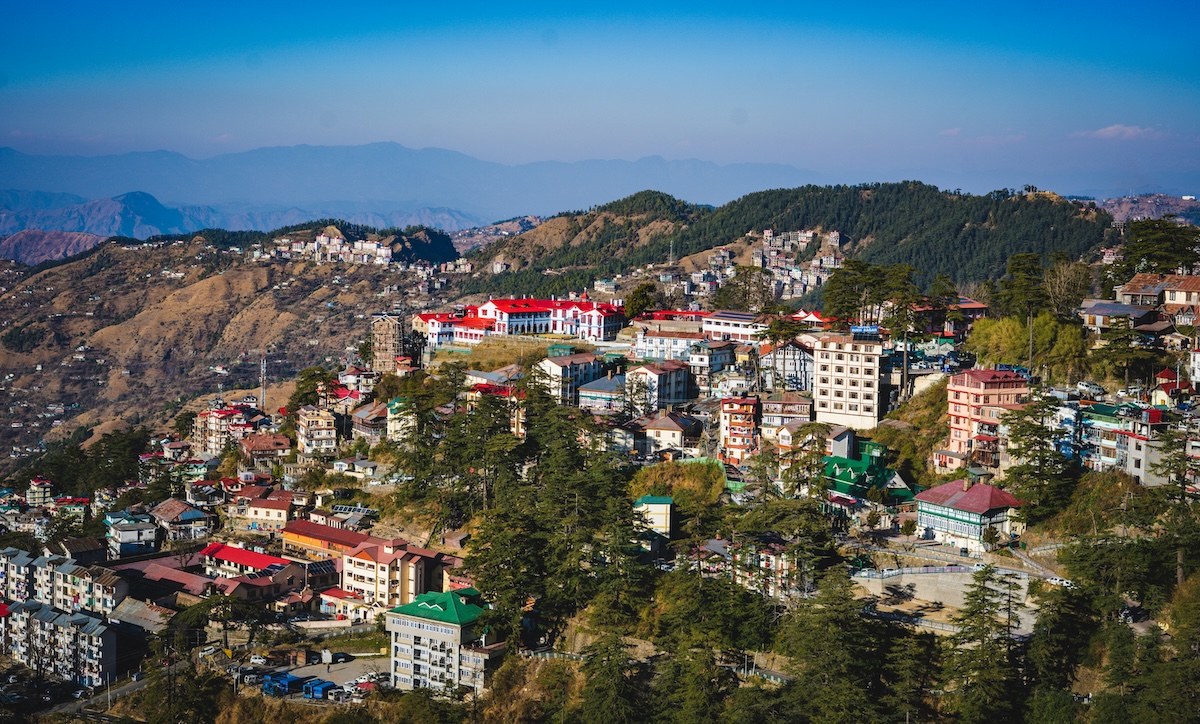
Shimla sits at 7,200 feet above sea level, surrounded by forests of cedar, pine, and rhododendron. The British chose it as their summer capital during the colonial era, and the charming Victorian-era buildings along its famous Mall Road still give the city a very distinct, almost European character — a fascinating contrast to the rest of India.

Begin the morning with a leisurely walk along the Mall Road (pronounced exactly as it sounds) — Shimla’s car-free promenade lined with colonial-era shops, cafes, and churches. Ride the chairlift (or hike if you prefer) up to the Jakhu Temple, dedicated to Lord Hanuman, the monkey god of Hindu mythology. The temple sits at 8,048 feet and offers the most breathtaking panoramic views of the Shimla valley and the surrounding snow-capped Himalayan peaks. Note: The resident monkeys at the temple are bold and friendly; keep snacks in your bag!

After lunch, drive 16 kilometers to Kufri (KOO-free), a small hill village and ski resort at 8,600 feet. In the winter months, Kufri transforms into a popular skiing destination; in summer and spring, it offers pony rides, scenic walks through apple orchards, and spectacular mountain views. Your car drops you as close as possible to all viewing points.

Drive from Shimla to Manali—Through the Kullu Valley (approx. 7 hrs) +

The drive from Shimla to Manali winds through the stunning Kullu (KUL-loo) Valley, following the Beas (BEE-us) River northward as the Himalayan peaks grow larger and closer around you. This is arguably one of the most beautiful road journeys in the Indian subcontinent—steep pine-covered cliffs, cascading waterfalls, and small Himalayan villages dotting the riverbanks.

Your certified mountain driver navigates the mountain roads safely and confidently. Planned stops are made at clean, verified rest facilities along the route. Arrive in Manali by evening and check in to your hotel, with rooms confirmed to have central heating. Manali sits at the edge of the Trans-Himalayan region—and the crisp, thin mountain air is immediately noticeable and refreshing.


Manali — Hadimba Temple, Solang Valley Adventures & Rohtang Pass +

Manali is India’s premier adventure destination, and today you experience everything that makes it extraordinary. Begin at the Hadimba Temple—a remarkable 16th-century pagoda-style wooden temple set inside a thick forest of centuries-old deodar cedar trees. Dedicated to Hadimba Devi (a goddess from the Hindu epic Mahabharata), this temple is peaceful, beautiful, and utterly unlike anything else in the world.

Drive to Solang Valley (SOH-lang), located 14 kilometers north of Manali. This wide, dramatic valley surrounded by snow-covered peaks is an adventure playground: paragliding from the mountain ridge, zorbing (rolling downhill inside a giant transparent sphere), snow tubing, and skiing in season. Your guide will help you choose and arrange any activities you want to try on-site.

The highlight attempt of the day is a visit to Rohtang Pass (elevation: 13,051 feet) or the Atal Tunnel, which takes you through the heart of the Himalayan mountain range into the high-altitude Lahaul Valley beyond. The government-issued permits required for this journey are fully handled and booked by our team in advance — your visit is not left to chance. At this elevation, views of glaciers, permanent snowfields, and the raw Himalayan landscape are simply breathtaking.

Free Morning in Manali — Drive Back to Delhi (approx. 10 hrs overnight) +

Enjoy a relaxed morning in Manali after all your mountain adventures. Take a stroll through the Manali bazaar (local market)—a lively mix of warm woolen scarves, dried fruits, local honey, hand-carved wooden items, and Tibetan-style jewelry. This is the perfect place to find authentic mountain souvenirs at reasonable prices.

After breakfast and hotel checkout, your driver begins the long journey back to Delhi. This is approximately a 10-hour drive, and we take it seriously: your driver makes planned stops only at clean, verified rest facilities along the National Highway—including major highway plazas with proper western-style restrooms, sit-down restaurants, and reliable food standards. You will not be stopping at roadside shacks. Arrive in Delhi in the late evening or at night.

Delhi Airport Transfer & Departure +

Your driver transfers you directly to Indira Gandhi International Airport for your onward flight. Allow at least three hours before departure for check-in and security at Delhi’s international terminal.

Book Tour

TOUR BOOKING FORM

Inclusions

check

Stay overnight at three- to four-star hotels

check

Selected meals and breakfast every morning

check

Guided tours according to the program

check

Transportation in air-conditioned cars

check

Entrance fees for attractions

check

Local and international transportation

Exclusions

check

International travel

check

Meals that are not mentioned in the itinerary

check

Tips, personal expenses

check

Extra-curricular activities and excursions

Related Tours

What our customers say

Frequantly Asked Questions Releted To The Golden Triangle Tour with Shimla & Manali

Will I have the same driver and vehicle for the entire 9-day trip? +

Yes, completely. You will have one private vehicle and one consistent driver assigned to you from Day 1 through your final airport drop on Day 9. We do not switch vehicles or drivers mid-trip, and we do not use shared group transportation. Your driver is background-checked, verified, and fully certified for Himalayan mountain driving — including the challenging hairpin roads in Shimla and Manali. All local taxi union clearances for hill regions are handled by us in advance so you will never be told mid-trip that your driver cannot enter a zone.

The Manali-Delhi drive is very long. How do you make it comfortable? +

We take the long drives seriously. Your driver is instructed to stop only at clean, pre-verified rest facilities—major highway plazas with western-style restrooms, sit-down restaurants, and reliable hygiene standards (similar to US highway service plazas). You will never be stopped at a poorly maintained roadside stall. We recommend bringing a neck pillow, noise-canceling headphones, and any personal snacks you prefer. The drive from Manali to Delhi is approximately 10 hours, so we typically depart after an early breakfast and plan stops every 2 to 2.5 hours.

Is the Rohtang Pass visit guaranteed, or could we miss it? +

Unlike many tour operators who leave Rohtang Pass permits to chance, we book the government-issued permits well in advance through the official Himachal Pradesh tourism authority. This means your snow mountain experience is planned and protected, not dependent on whether permits happen to be available on your travel day. In the rare event that the pass is closed due to genuine extreme weather (a real safety concern, not a paperwork failure), we will route you through the Atal Tunnel for an equally spectacular high-altitude experience.

Are there any extra costs I might be asked to pay on the ground? +

No surprise charges. All entrance fees, highway tolls, parking charges, hill-area union clearances, and Rohtang Pass permits are included in your package and handled by us. The only items not included are your personal meals (lunches and dinners), optional adventure activities in Manali that you choose to book on-site, and personal expenses. Your Guest Happiness Manager can give you a complete cost breakdown for any optional activity before you commit to anything.

How do I know I will get the hotel I was shown — and not a different one at check-in? +

We provide you with the exact names of all your hotels at the time of booking — not vague descriptions like ‘4-star equivalent.’ You will have the hotel name, address, and booking confirmation before you arrive in India. Our partner hotels are fixed, regularly inspected properties. In Shimla and Manali specifically, we verify and confirm that every room has central heating or high-capacity room heaters before finalizing the booking—because this is one of the most common complaints in mountain travel, and we refuse to let it happen to our guests.

Do the mountain hotels have elevators, or will I have to climb stairs? +

We specifically ask about elevator availability and stair requirements when booking hotels in Shimla and Manali, where many properties are built into steep hillsides. For guests who have mobility concerns or prefer ground-floor rooms, please let us know at the time of booking, and we will confirm this with our hotel partners before your trip begins. For Shimla’s hilly terrain, your driver will drop you at the closest accessible point to every attraction.

Will my hotel room be in a secure, mainstream part of the property? +

Yes. We book rooms in the main building corridors of our partner hotels—not in isolated cottage wings or remote annexes. All our partner hotels have modern internal locking systems. Solo female travelers can request rooms on lower floors with additional proximity to the reception desk, and we will confirm this arrangement before arrival.

Who do I call if I have a problem with my driver or any issue during the trip? +

You will have a dedicated Guest Happiness Manager — a separate, senior member of our team who is completely independent of your driver — available to you 24 hours a day, 7 days a week via WhatsApp. If any issue arises at any point during your trip, whether it is a hotel complaint, a personal concern with your driver, a medical situation, or simply a question, your Guest Happiness Manager is your direct line to an immediate solution. You will receive this contact number before you board your flight.

Are your drivers background-checked and trained in guest safety? +

Yes. All our drivers undergo formal background verification before being assigned to international guests. They follow a strict no-outsider policy during your trip — meaning they will not pick up hitchhikers, personal acquaintances, or anyone else in the vehicle while you are traveling. For female travelers, this policy is especially important, and we stand behind it completely. Our drivers are also trained in basic first aid and emergency protocols for mountain driving situations.

What about altitude sickness in Manali and Rohtang Pass? +

Altitude sickness (officially called acute mountain sickness, or AMS) is a real and common experience for travelers coming from sea-level cities. Symptoms typically include headache, mild nausea, and fatigue and usually resolve within 24 hours with rest and hydration. For the Rohtang Pass drive, our vehicle carries a basic first aid kit and a portable oxygen canister as a standard precaution. We also recommend consulting your physician before travel about whether acetazolamide (Diamox) is right for you. If you feel unwell at altitude, your driver is instructed to descend immediately — your health is always the priority.

Is this tour appropriate for senior travelers or those with limited mobility? +

Yes, with appropriate advance notice. We arrange battery-operated carts at the Taj Mahal. We confirm hotel elevator access or ground-floor rooms for guests with mobility concerns. Your driver drops you at the closest possible access point to every attraction. Some sites, like the Amber Fort in Jaipur, do involve walking and some inclines—your guide will always identify the easiest route and help you move at your own pace. Please share any mobility needs at the time of booking so we can customize your arrangements.

I have dietary restrictions or food allergies. Will restaurants understand? +

Please share your dietary requirements with us in detail when you book. We brief our partner restaurants in Agra and Jaipur specifically on international guest standards, including mild spice levels and common allergy concerns. Your guide will communicate your needs directly at every restaurant. For guests with severe allergies (gluten, nuts, dairy, etc.), we also recommend carrying a written allergy card in Hindi, which we can help you prepare before your trip begins.

I am worried about food safety and traveler's stomach. How do you handle this? +

We recommend that all international guests start with bottled water throughout the trip and avoid raw salads or unpeeled fruits from street vendors, particularly in the first few days. Our partner restaurants are selected for hygiene standards as well as food quality. Your driver’s planned rest stops on highway drives are at certified, established facilities — not roadside food stalls. Carry basic over-the-counter medication for stomach upset (your doctor can advise) and you will be well prepared.

What is the Pietra Dura demonstration in Agra all about? +

Pietra dura (Italian for ‘hard stone’) is the precise art form used on the Taj Mahal—cutting semi-precious stones like lapis lazuli, malachite, and mother of pearl into tiny, perfect shapes and setting them into marble in decorative patterns. It is a craft that was introduced to India by Mughal emperors in the 1600s and is still practiced by skilled artisans in Agra today. During your visit, you will watch a master craftsperson demonstrate the technique live—the same method used by thousands of workers who built the Taj Mahal over 22 years. This is one of the most genuinely educational cultural experiences on the entire tour.

What is the textile workshop experience in Jaipur? +

In Jaipur, the tradition of hand-knotted rug and carpet weaving stretches back centuries to the royal Mughal courts. In a working artisan workshop, you will see weavers at the loom, hand-tying individual knots at a pace of hundreds per hour using wool or silk thread. Your guide explains the symbolism of the patterns, the difference between machine-made and hand-made rugs, and how to evaluate quality. This is not a sales presentation — it is a genuine craft heritage experience that most visitors find deeply fascinating.

Am I expected to buy anything at the craft workshops? +

Absolutely not. You are there as a guest and a learner. The artisans are happy to have you observe, ask questions, and take photographs. If something strikes you as beautiful and you want to bring a piece of Indian craftsmanship home, the team will be glad to help. But there is no pressure, no minimum purchase requirement, and you will never feel rushed. The experience is valuable whether or not you decide to buy anything.

I am traveling in February. What should I know about the weather? +

February is a lovely time for Delhi, Agra, and Jaipur — pleasantly cool (45–65°F / 7–18°C) with mostly clear skies, which means excellent visibility for the Taj Mahal and the forts. Shimla in February will be cold (20–40°F / -6–4°C) and may have snow on the ground, which is actually a beautiful experience. Manali in February is very cold (10–35°F / -12–1°C), and Rohtang Pass is at its most dramatic with full winter snowscapes. Pack thermal underlayers, a heavy waterproof jacket, insulated boots, and warm gloves for the mountain portions of the trip.

I am traveling in November. What should I pack? +

November is one of the best months to visit North India. Delhi, Agra, and Jaipur are cool and pleasant (55–80°F / 13–26°C) with very few tourists. Shimla will be cool (35–55°F / 2–13°C), and Manali will be cold (25–50°F / -4–10°C). Pack layers—a heavy jacket for the mountains and lighter clothing for the plains cities. Rohtang Pass in November is still accessible with permits but may see early snowfall, which makes it especially scenic.

What is the best way to stay connected during the trip? +

We recommend purchasing a local Indian SIM card at Delhi Airport on arrival (available at counters immediately after customs). A prepaid tourist SIM with data costs approximately $10–15 USD and gives you 4G internet throughout the Golden Triangle and most of Shimla. In higher-altitude areas of Manali and near Rohtang Pass, cell coverage becomes limited—download offline maps of the region on Google Maps or Maps. me before you leave Delhi. Your driver and our guest happiness manager are always reachable even if your personal data signal drops.

Who is this tour best suited for? +

This tour is an excellent fit for first-time visitors to India who want a comprehensive, expertly managed experience that covers both the classic cultural highlights and a genuine Himalayan mountain adventure. It is especially popular with business travelers combining work in Delhi with leisure exploration; couples and honeymooners seeking a mix of romance and adventure; professionals from the US and Europe on a 1- to 2-week trip; and anyone who wants the depth of India’s history alongside the beauty of its mountains—all without having to plan any logistics themselves. We handle everything; your only job is to show up and experience it.

Guide Popup Form