
Same Day Tour

Private Full Delhi City Tour

4.9 (2,304)

Discover the heart of India on this private, full-day guided tour of New Delhi — one of the world’s most historically rich and culturally layered cities. From centuries-old monuments built by powerful emperors to peaceful spiritual sanctuaries and world-famous landmarks, this tour covers it all in a single day. You will travel in a private, air-conditioned vehicle with your own dedicated expert guide who brings every story, artwork, and tradition to life through engaging and easy-to-follow commentary. This is not a rushed group bus tour — your pace is comfortable, your experience is personal, and every stop is chosen to give you the most meaningful and memorable day in Delhi. Whether you are here for business or leisure, for a few days or a few weeks, this tour is designed to show you the real soul of Delhi in one unforgettable day.

Tour Highlights

check

Jama Masjid (Friday Mosque) — Step inside one of the largest and most stunning mosques in India, built in the 1600s by the Mughal Emperor Shah Jahan.

check

Chandni Chowk Market — Walk (or ride a three-wheeled auto-rickshaw, locally called a tuk-tuk) through one of Old Delhi's oldest and most colorful bazaars (open-air markets), full of spices, fabrics, sweets, and street food.

check

Karol Bagh Market — Browse a lively neighborhood shopping area that blends traditional Indian stores with modern retail, perfect for finding local goods and souvenirs.

check

Red Fort (Drive-Past) — Admire the massive red sandstone walls of this UNESCO World Heritage fort, which served as the main home of Mughal emperors for nearly 200 years.

check

India Gate (Drive-Past) — See Delhi's most iconic war memorial up close as you drive through the grand ceremonial boulevard.

check

Rashtrapati Bhavan and Parliament House (Drive-Past) — Pass by the official home of India's President and the seat of Indian democracy, both impressive examples of colonial-era architecture.

check

Gurudwara Bangla Sahib — Visit one of the most important Sikh temples (a gurudwara is a place of Sikh worship and community gathering) in Delhi, known for its peaceful golden dome, reflective sacred pool, and tradition of free meals offered to all visitors.

check

Agrasen Ki Baoli — Explore a beautifully preserved 14th-century step-well (a baoli is a traditional underground water storage structure with descending stairs) tucked away in the middle of modern Delhi.

check

Traditional Indian Lunch — Enjoy a satisfying midday meal featuring classic North Indian dishes at a quality local restaurant.

check

Humayun's Tomb — Walk through the landscaped gardens and marvel at this magnificent UNESCO World Heritage tomb, which directly inspired the design of the Taj Mahal.

check

Artisan's Legacy: Marble Inlay and Silk Rug Residencies — Visit two private, Government-recognized artisan residencies where master craftsmen demonstrate the same marble inlay techniques used in the Taj Mahal and the traditional hand-knotting of fine silk rugs, a tradition dating back to the Mughal royal courts.

check

Lotus Temple — End your day at this award-winning lotus-shaped temple, a Baha'i House of Worship (a faith centered on unity among all religions) that welcomes people of all backgrounds and beliefs.

Private Full Delhi City Tour Complete Itinerary

Jama Masjid: India's Grand Imperial Mosque +

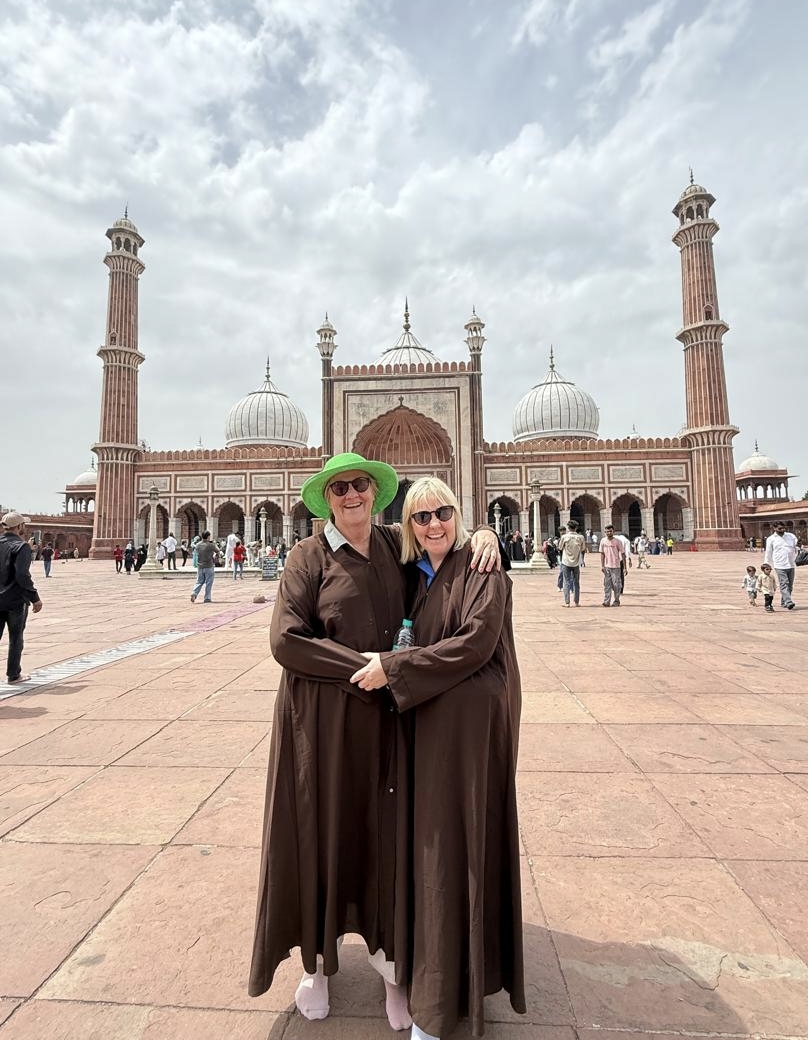
Your first stop is the Jama Masjid, which translates to ‘Friday Mosque’—the mosque where Muslims traditionally gather for midday Friday prayers. Built in 1656 by Emperor Shah Jahan, the same ruler who built the Taj Mahal, this is one of the largest mosques in all of India and can hold up to 25,000 worshippers at one time. The structure is built from red sandstone and white marble, with three grand gateways, four watchtowers, and two towering minarets (slender vertical towers traditional in Islamic architecture). Your guide will walk you through the vast open courtyard, explain the Mughal (the dominant ruling dynasty in India from the 1500s to the 1800s) style of architecture, and help you understand the spiritual and cultural significance of this living place of worship. A modest covering for shoulders and legs is provided at the entrance at no charge.

Tip: Arrive early in the morning to enjoy the peaceful atmosphere before the crowds build up.

Chandni Chowk: Old Delhi's Most Famous Bazaar +

Chandni Chowk, which roughly translates to ‘Moonlight Square,’ is one of the oldest and busiest markets in all of Asia — and it has been this way for over 350 years. The lanes here are narrow and packed with character: you will find spice merchants, silver and gold jewelry sellers, fabric shops, sweet makers, and street food stalls all operating side by side. For an immersive experience, you will take a short ride in a tuk-tuk (a three-wheeled motorized auto-rickshaw that is one of the most common forms of transport in Indian cities) through the winding old lanes of Old Delhi, giving you a truly local perspective on how daily life unfolds in this centuries-old neighborhood. Your guide will point out hidden gems along the way and keep you comfortable throughout.

Tip: Try the famous jalebis (crispy, syrup-soaked fried sweets) or kulfi (a dense, slow-frozen Indian ice cream) from a traditional Old Delhi sweet shop — your guide can recommend the best spots.

Red Fort: A UNESCO World Heritage Icon (Drive-Pass) +

As you leave Old Delhi and make your way south, you will drive past the magnificent Red Fort, known in Hindi as Lal Qila. Built entirely of red sandstone, this enormous fortress served as the main palace and seat of power for Mughal emperors from 1638 all the way to 1857—nearly two full centuries of royal history. The fort’s massive walls stretch nearly two kilometers, and its main gateway, the Lahori Gate, remains one of the most recognized and photographed structures in India. Even from the road, the scale and grandeur of the fort are breathtaking. The Indian Prime Minister addresses the nation from its walls every year on Independence Day (August 15). UNESCO (the United Nations cultural heritage organization) has recognized it as a site of outstanding universal value.

Tip: If you have time on a future visit to Delhi, a full inside tour of the Red Fort takes about 2 hours and is highly recommended.

India Gate: Delhi's Most Beloved National Monument (Drive-Pass) +

India Gate is a 42-meter-tall triumphal arch (a large ceremonial gateway) built in 1931 to honor the approximately 70,000 Indian soldiers who died fighting in World War I and the Anglo-Afghan War. It stands at the eastern end of Kartavya Path (previously known as Rajpath), the grand ceremonial boulevard that stretches through the heart of New Delhi. The names of more than 13,000 fallen soldiers are inscribed on the arch’s walls. Beneath it burns the Amar Jawan Jyoti — a flame that symbolizes the eternal honor of India’s fallen soldiers. The surrounding lawns are a beloved gathering spot for families in the evenings. You will get a clear and beautiful view as you drive through.

Tip: The best light for photos is in the early morning or just before sunset, when the warm golden light hits the arch perfectly.

Rashtrapati Bhavan and Parliament House: India's Seat of Government (Drive-Pass) +

Driving through New Delhi’s central ceremonial district, you will pass two of India’s most important and architecturally impressive government buildings. Rashtrapati Bhavan (the President’s Home) is the official residence and working office of the President of India. With 340 rooms, it is one of the largest presidential residences in the world. Built in 1929 during British colonial rule, it blends classical European architecture with traditional Indian and Mughal design elements — most notably a large central dome inspired by the famous Buddhist stupa (a dome-shaped monument) at Sanchi. Parliament House (Sansad Bhavan), nearby, is where India’s two legislative chambers meet to debate and pass the laws that govern the world’s largest democracy. The building is currently undergoing a historic expansion as part of a new Central Vista development project.

Tip: The wide, tree-lined boulevard here offers some of the best photo opportunities of your day—have your camera ready.

Gurudwara Bangla Sahib: Delhi's Most Revered Sikh Temple +

This beautiful and deeply spiritual gurudwara (Sikh place of worship and community service) is one of the most significant Sikh shrines in India. It was built on the site where the eighth Sikh Guru (a Guru in Sikhism is a sacred spiritual teacher and leader), Guru Har Krishan, stayed in the 17th century and is said to have performed miraculous healings during a deadly smallpox outbreak. The temple complex is dominated by a gleaming golden dome and surrounded by a large sacred pool called the Sarovar (a reflective holy water body central to Sikh worship). The most powerful experience here is witnessing the Langar—the free community kitchen that serves thousands of hot vegetarian meals every single day to anyone who walks in, regardless of religion, nationality, or status. This practice of selfless service is one of the core values of Sikhism.

Tip: Visitors of all faiths are warmly welcomed; simply cover your head with the scarf provided at the entrance as a sign of respect.

Agrasen Ki Baoli: A Hidden Underground Wonder +

Tucked behind modern office buildings and busy streets near Connaught Place (one of Delhi’s main commercial centers), Agrasen Ki Baoli is one of Delhi’s most surprising and atmospheric hidden gems. A baoli is a traditional Indian stepwell—a large, deep structure with wide staircases descending down into the earth, with rooms and galleries carved into the walls along the way, used historically for water storage and as a cool retreat from the summer heat. This particular baoli dates back to the 14th century and contains 108 steps leading down to the water level. The quiet, shaded galleries and the remarkable geometry of the descending stairways make it one of the most photographically striking spots in the entire city—a genuine moment of discovery in the middle of a bustling metropolis.

Tip: Bring your camera — the symmetry of the descending steps creates one of the most unique and shareable photos of your entire trip.

Traditional Indian Lunch: A Taste of North Indian Cuisine +

After a morning of exploration, your tour includes a sit-down lunch at a quality local restaurant offering a selection of traditional North Indian food. Expect aromatic dishes like dal makhani (a rich, slow-cooked black lentil dish); paneer butter masala (fresh cottage cheese in a creamy tomato sauce); freshly baked naan or roti (Indian breads cooked in a clay oven); fragrant basmati rice; and a variety of vegetable dishes. The restaurant is clean, air-conditioned, and familiar with international dietary preferences—vegetarian, vegan, and gluten-free options are available. This is a comfortable and enjoyable break that recharges you for the second half of the tour.

Tip: Let your guide know in advance if you have any dietary restrictions or allergies — the restaurant can almost always accommodate reasonable requests.

Humayun's Tomb: The Masterpiece That Inspired the Taj Mahal +

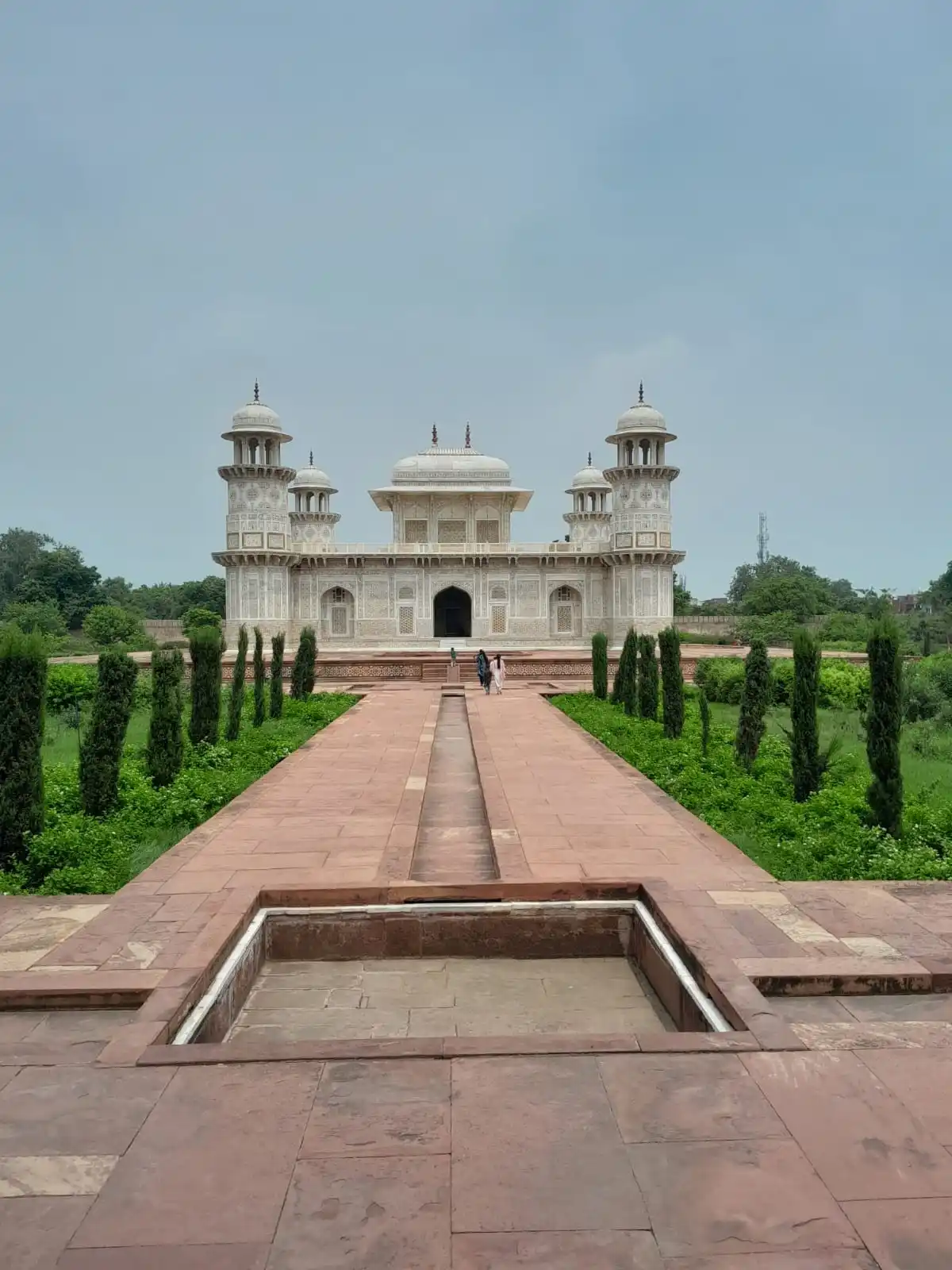
Built in 1572 by Empress Bega Begum in memory of her husband, Emperor Humayun—the second ruler of the Mughal dynasty—this stunning garden tomb is one of the finest examples of early Mughal architecture anywhere in the world. Humayun’s Tomb was the very first garden tomb ever built on the Indian subcontinent, and its design — a grand central dome surrounded by perfectly symmetrical gardens divided by pathways and water channels — became the blueprint for the Taj Mahal, which was built 80 years later. UNESCO has recognized it as a World Heritage Site. Walking through the peaceful, manicured gardens and approaching the monument up close, you will begin to understand the extraordinary artistic ambition and refined taste of the Mughal royal court. Your guide will connect the visual language of this tomb directly to what you will see if you visit the Taj Mahal in Agra.

Tip: Take your time in the gardens — this monument rewards those who slow down and look at the fine details of the inlay work on the walls and archways.

The Artisan's Legacy: A Private Viewing of Mughal Inlay Work and Hand-Knotted Silk Traditions +

One of the most unique and enriching parts of your day is a private visit to two Government-recognized artisan residencies in Delhi. These are not tourist shops — they are living workshops where you will see master craftsmen practicing the same art forms that were patronized by Mughal emperors centuries ago. At the Marble Inlay Residency, you will witness the art of Pietra Dura—the same intricate stone inlay technique used to create the breathtaking floral patterns on the walls of the Taj Mahal, where semi-precious stones like lapis lazuli, malachite, and mother-of-pearl are set by hand into white marble. At the Silk Rug Residency, you will see how hand-knotted silk rugs are made entirely by hand on traditional wooden looms—a process that can take several months or even years for a single rug and that traces its origins to the royal carpet workshops of the Mughal court. Both residencies offer a relaxed, unhurried atmosphere with clean private facilities, complimentary refreshments, and the opportunity to take home a genuine piece of Indian artisanal heritage if you wish. There is never any pressure to buy.

Tip: Ask the artisans about the time it takes to make a single piece—the answers will give you a deep appreciation for what handmade truly means.

Lotus Temple: A Peaceful End to Your Day +

Your tour concludes at the Lotus Temple, one of Delhi’s most visually stunning and universally beloved landmarks. The temple belongs to the Baha’i Faith—a religion founded in 19th-century Persia that teaches the unity of all major world religions and the oneness of all humanity. The building itself is shaped like a giant lotus flower (a symbol of purity and new beginnings in many Asian cultures) and is made of pure white marble. It has won several architectural awards since it opened in 1986 and attracts millions of visitors from all faiths every year. There is no worship ceremony, no sermon, and no religious obligation—people of all backgrounds are invited simply to sit in silence, meditate, reflect, or find a few moments of peace. The surrounding gardens are tranquil and beautiful. It is the perfect way to close a full and memorable day.

Tip: The white marble of the temple glows beautifully in the soft afternoon light — ideal for photos before your ride back.

Book Tour

TOUR BOOKING FORM

Inclusions

check

Pick-up & Drop-off

check

Private Air Conditioned Car

check

Private Guide

check

Monument Entrances

check

Tuk-Tuk Ride in Old Delhi

check

Complimentary Water Bottle

check

All Taxes

Exclusions

check

Meal

check

Tip or Gratuities

check

Any Personal Expenses

Related Tours

What our customers say

Frequantly Asked Questions Releted To Private Full Delhi City Tour

Is this really a private tour, or will I be joined by other travelers? +

This tour is 100% private. Your vehicle, your guide, and your entire day are reserved exclusively for you and your travel companions. You will not be grouped with other travelers at any point. This means your guide’s full attention is yours, and the pace of the day adjusts to your energy and interests—not a fixed group schedule.

I have a busy schedule. Can the itinerary be adjusted to fit my available time? +

Absolutely. While the itinerary above represents the ideal full-day experience, your guide will work with you from the start to prioritize the stops that matter most to you. If you have a conference, a dinner commitment, or a flight to catch, simply let us know at the time of booking, and we will build a version of the tour that fits your schedule perfectly.

What are the monument visiting hours? Could any sites be closed during my tour? +

Most of Delhi’s major monuments, including Humayun’s Tomb, the Lotus Temple, Agrasen Ki Baoli, and Gurudwara Bangla Sahib, are open every day. Jama Masjid is closed to non-worshippers during the five daily Islamic prayer times (each lasting approximately 30 minutes). Your guide plans the routing around these windows, so you will never arrive at a closed entrance. If a site is unexpectedly closed for a national holiday or special event, your guide will smoothly substitute an equally interesting alternative.

Are there any hidden fees, parking charges, or extra costs I should budget for? +

None whatsoever. All monument entry tickets, the tuk-tuk ride, your lunch, transport, guide fees, bottled water, and all applicable taxes are covered in your tour price. You will not be asked to pay for parking, tolls, or any other operational cost during the day. The only additional spending you might choose to do is purely personal—buying a souvenir, purchasing artwork from the artisan residencies, or tipping your guide and driver if you feel moved to do so.

How much walking is involved? Is this tour suitable for seniors or guests with mobility concerns? +

The tour is designed to be accessible and comfortable for all fitness levels. Your driver will drop you off as close as possible to each monument entrance—there is no long walking from distant parking areas. The artisan residency visits are entirely seated experiences with chairs, cushioned seating, and no physical exertion required. If you or someone in your group has specific mobility needs, please inform us at booking, and we will make all necessary arrangements.

Is the tour suitable for children? Will kids stay engaged throughout the day? +

Yes, and children often have a wonderful time on this tour. Your guide is experienced at making history come alive for young minds through storytelling, fun facts, and hands-on moments. The Marble Inlay Residency is especially popular with children—watching craftsmen set tiny colored stones into marble by hand is genuinely fascinating for all ages. The tuk-tuk ride through Old Delhi is usually a highlight for kids. If your children have specific interests (architecture, art, food, vehicles), let your guide know, and they will tailor the commentary accordingly.

Is this tour safe and comfortable for women traveling solo or in a group? +

Yes. Your guide actively manages your experience at every step to ensure you feel completely comfortable and secure. At crowded markets or popular monuments, your guide stays close and handles any unwanted attention from street vendors or passersby so that you can enjoy each stop in peace. The artisan residencies are private, calm, and hassle-free environments with clean Western-style restroom facilities. Many of our most enthusiastic repeat clients are women who travel solo or in all-female groups.

What are the Marble and Rug residency visits? Are they shopping stops? +

These are private artisan workshops where you are invited to watch master craftsmen practice centuries-old Mughal art forms—the same marble inlay work found on the Taj Mahal and the hand-knotted silk rug weaving once commissioned by the Mughal royal court. Think of them as living museums. You will be offered tea or coffee, given a comfortable seat, and treated to a genuine demonstration of skills that take years to learn. You are welcome to purchase a piece if you fall in love with something, but there is zero pressure. Many guests find these visits to be among the most memorable parts of their day in Delhi.

What is the hygiene and food safety standard at the lunch restaurant and at the artisan residencies? +

We select our restaurant and artisan partner locations based on consistently high standards of cleanliness and food safety — they are familiar with the dietary expectations of international travelers from the US, Europe, and beyond. The lunch restaurant is air-conditioned, serves filtered water, and prepares food in a hygienic kitchen. The artisan residencies have clean, private, Western-style restroom facilities. If you have a medical condition, specific dietary requirement, or food allergy, please inform us at booking, and we will ensure everything is prepared accordingly.

Does my guide speak English fluently? Will I be able to have a real conversation, not just hear a scripted recitation? +

Your guide is not just a translator—they are a knowledgeable specialist in Indian heritage, art history, and living culture who is fully fluent in English. They are trained to go well beyond dates and names to tell the real stories behind each monument: the personal lives of the emperors who built them, the techniques the artisans used, the social and religious context of the time. Guests consistently tell us that conversations with their guide were among the highlights of their time in India.

What happens if my business schedule changes and I need to cancel or reschedule? +

We completely understand that business travel plans can change on short notice. Please contact us as early as possible, and we will do our best to reschedule your tour to a date that works for your revised itinerary. Our cancellation and modification policies are outlined at the time of booking, and we aim to handle all changes with maximum flexibility and minimum stress for our guests.

Guide Popup Form